The problem
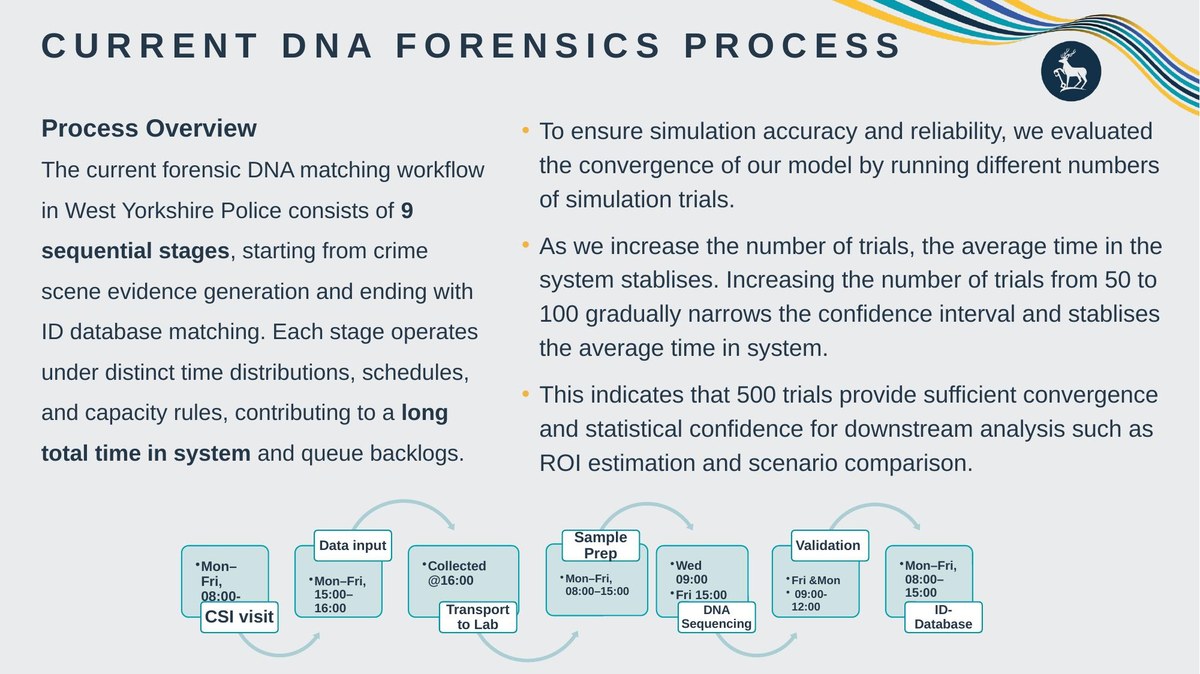
A police DNA-forensics process runs across multiple stages with queues and limited capacity, and cases were backing up somewhere in it. The task: map the as-is process, find where the delay actually sits, and work out what any fix would be worth before anyone spends money on it.
Approach
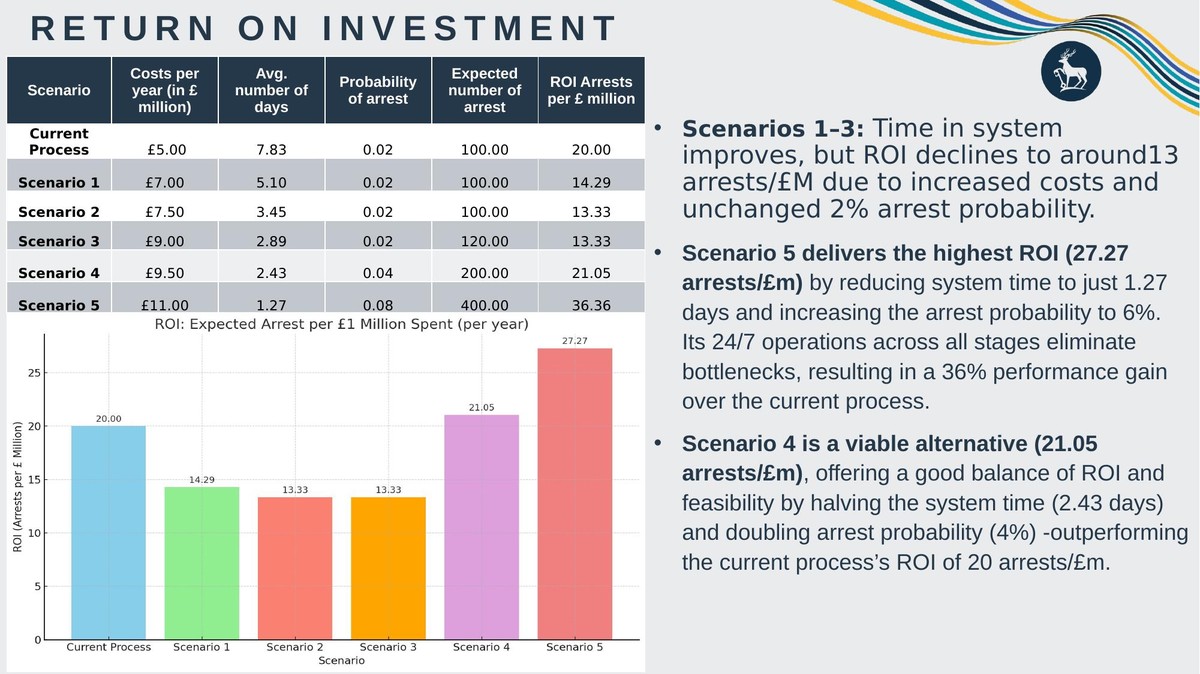
Built six end-to-end discrete-event models in Simul8: the current nine-stage process as the baseline, plus five improvement scenarios as the to-be options. Ran each at 500 trials for convergence, with the confidence interval stabilising well before 500. Then layered a Monte-Carlo ROI model that translates time saved into arrests per £m spent, so each option came with a number the business could weigh, not just an operational opinion.
Result
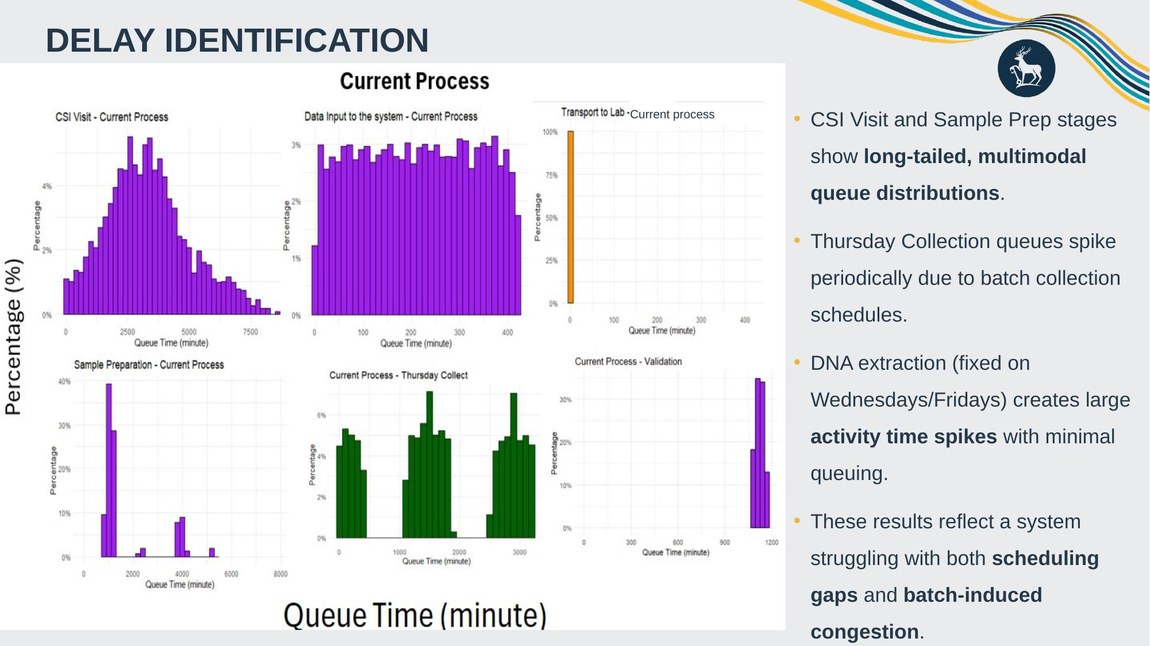
The simulation pinned the bottlenecks to the CSI-visit and sample-prep queues, which exceeded 6,500 and 4,000 minutes at the 95th percentile, and the ROI model then ranked the fixes on return rather than gut feel. Scenario 5, moving all stages to 24/7, came out best at 27.27 arrests per £m against the current 20.0, with system time cut by 36%. So the recommendation wasn't 'it could be faster', it was 'here is the option with the best return, and here is why'. That is the whole job.
Tools
Simul8 Discrete-event simulation ROI analysis