The problem
Professional discrete-event simulation tools such as Arena, SIMUL8 and AnyLogic are powerful, but they're expensive and they're abstract. For students, SMEs and quick prototyping, there was a gap: a low-cost, open-source alternative where a stakeholder can actually watch the process run rather than read a table of outputs.
Approach
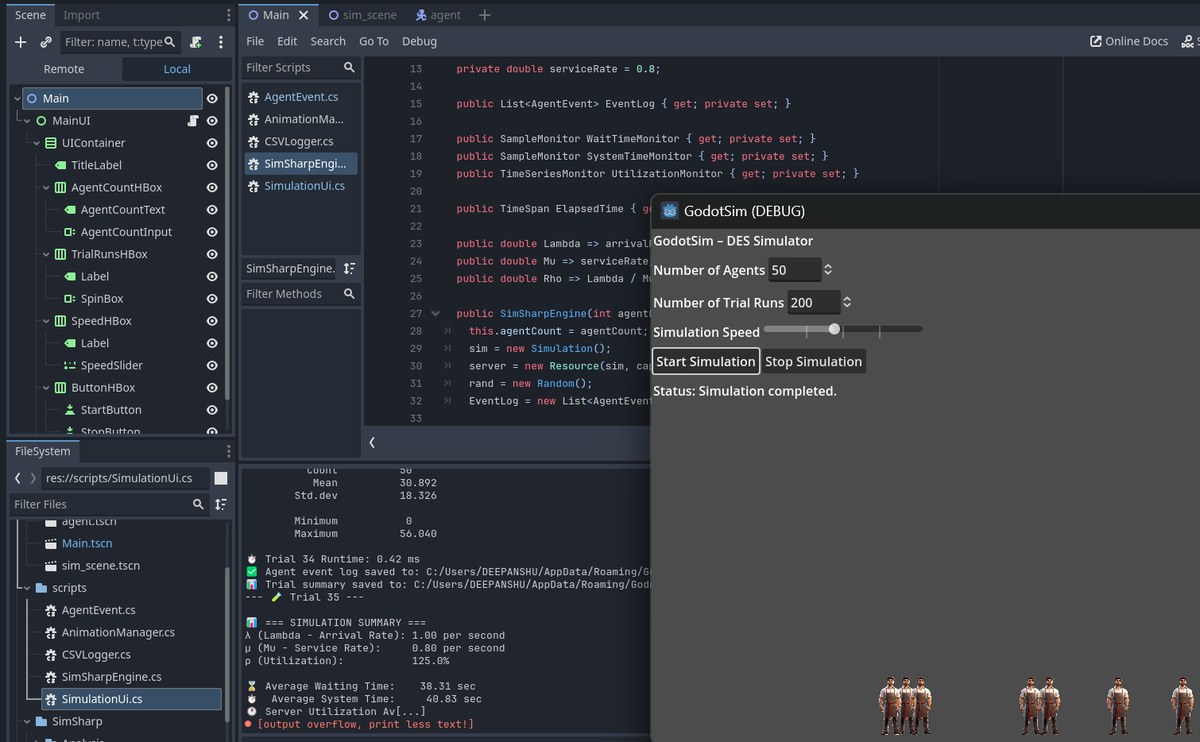
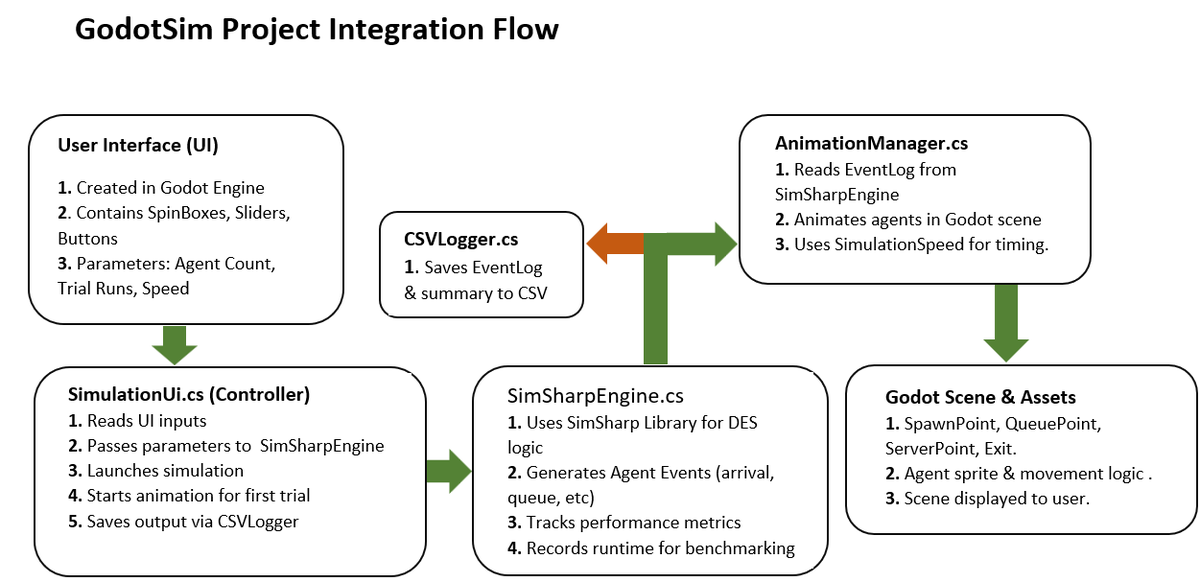
Built GodotSim, integrating the SimSharp discrete-event engine with the Godot game engine. Embedded SimSharp's source directly into Godot rather than depending on external DLLs, and designed a modular architecture that cleanly separates the simulation logic (event scheduling, metrics) from the visualisation (UI, animation). Worked in C# and GDScript, with real-time dashboards for wait time and utilisation, following a formal Design Science Research methodology.
Result
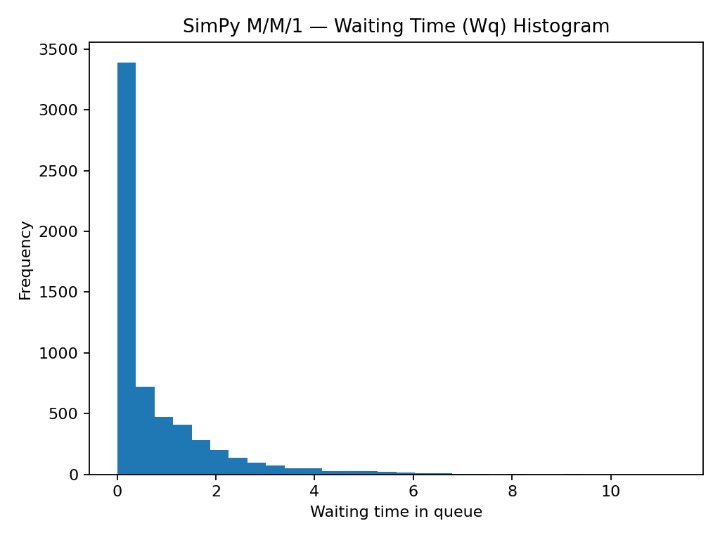
A working, novel system that runs M/M/1 queues in real time behind a visual front end, and taught itself a game engine and two languages to get there. It was validated against SimPy, a standard Python DES library, with the two producing a matching M/M/1 waiting-time distribution. That validation is the point a reviewer should take away: the visual layer isn't decoration, the numbers under it are provably correct, so a non-technical stakeholder can trust what they're watching.
Why it belongs here
On the surface it's an engineering project, but the point is making a complex process visible and understandable to non-technical people, which is the core of business analysis. It also closes a loop: the Operational Analytics project above used a DES tool; this dissertation built one.
Tools
C# GDScript SimSharp Godot Design Science Research